Damodarashtakam (दामोदराष्टकम्) Lyrics, Translation & Meaning | Kartik Month Krishna Prayer
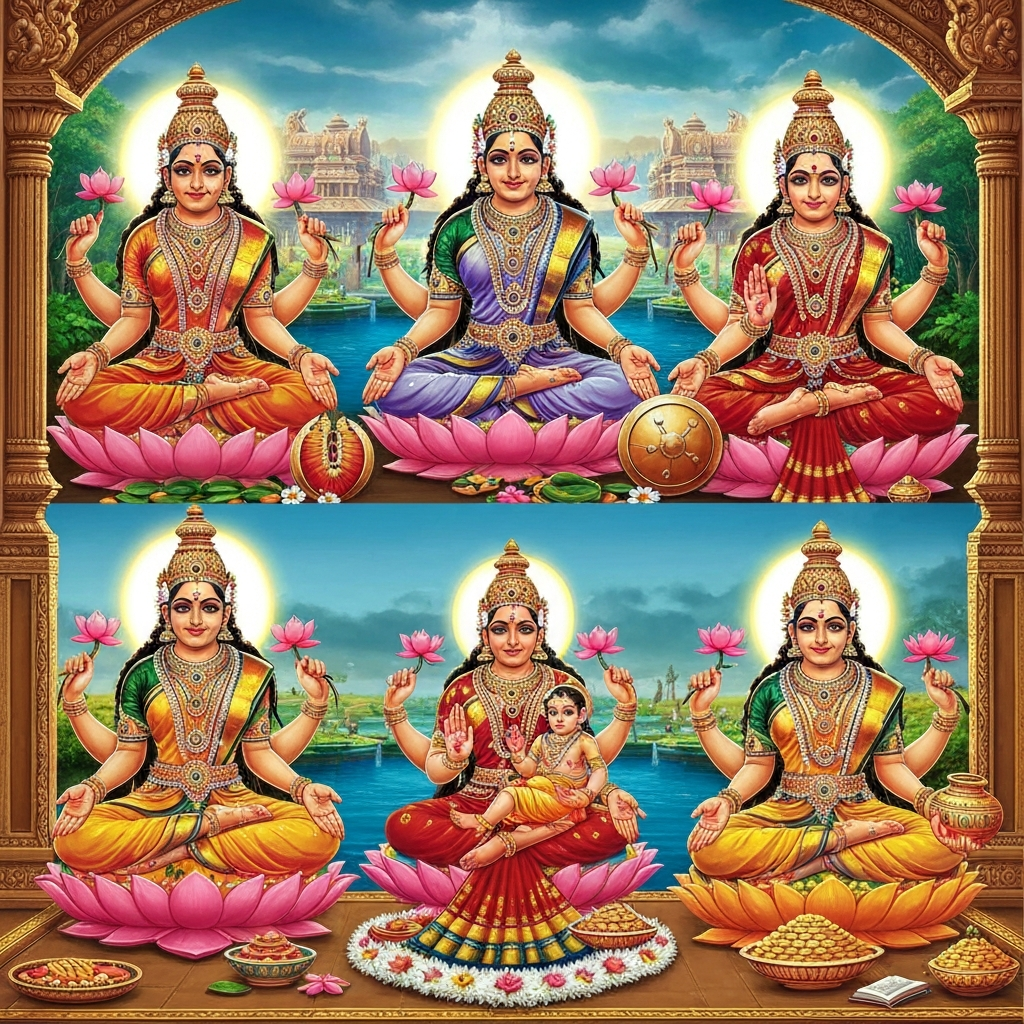
Cover image generated by AI · #Greetingify · #SocialBotStudio
Read the complete Damodarashtakam (दामोदराष्टकम्) with Sanskrit lyrics, English translation, meaning, and cultural background. This beloved Kartik-month prayer glorifies Lord Krishna as Damodara, bound by the love of Mother Yashoda.
नमामीश्वरं सच्चिदानन्दरूपंलसत्कुण्डलं गोकुले भ्राजमानम् ।यशोदाभियोलूखलाद्धावमानंपरामृष्टमत्यन्ततो द्रुत्य गोप्या ॥ १॥
रुदन्तं मुहुर्नेत्रयुग्मं मृजन्तंकराम्भोजयुग्मेन सातङ्कनेत्रम् ।मुहुः श्वासकम्पत्रिरेखाङ्ककण्ठ-स्थितग्रैवं दामोदरं भक्तिबद्धम् ॥ २॥
इतीदृक्स्वलीलाभिरानन्दकुण्डेस्वघोषं निमज्जन्तमाख्यापयन्तम् ।तदीयेषितज्ञेषु भक्तैर्जितत्वंपुनः प्रेमतस्तं शतावृत्ति वन्दे ॥ ३॥
वरं देव मोक्षं न मोक्षावधिं वान चान्यं वृणेऽहं वरेशादपीह ।इदं ते वपुर्नाथ गोपालबालंसदा मे मनस्याविरास्तां किमन्यैः ॥ ४॥
इदं ते मुखाम्भोजमत्यन्तनीलैःवृतं कुन्तलैः स्निग्धरक्तैश्च गोप्या ।मुहुश्चुम्बितं बिम्बरक्ताधरं मेमनस्याविरास्तामलं लक्षलाभैः ॥ ५॥
नमो देव दामोदरानन्त विष्णोप्रसीद प्रभो दुःखजालाब्धिमग्नम् ।कृपादृष्टिवृष्ट्यातिदीनं बतानु-गृहाणेश मामज्ञमेध्याक्षिदृश्यः ॥ ६॥
कुवेरात्मजौ बद्धमूर्त्यैव यद्वत्त्वया मोचितौ भक्तिभाजौ कृतौ च ।तथा प्रेमभक्तिं स्वकां मे प्रयच्छन मोक्षे ग्रहॊ मेऽस्ति दामोदरेह ॥ ७॥
नमस्तेऽस्तु दाम्ने स्फुरद्दीप्तिधाम्नेत्वदीयोदरायाथ विश्वस्य धाम्ने ।नमो राधिकायै त्वदीयप्रियायैनमोऽनन्तलीलाय देवाय तुभ्यम् ॥ ८॥
Full English TranslationVerse 1I offer my obeisance to the Supreme Lord, whose form is eternal existence, knowledge, and bliss; whose earrings swing beautifully; who shines brilliantly in Gokula; and who runs from Mother Yashoda, who chases Him with great speed.Verse 2Seeing His mother's stick, He cries repeatedly, rubbing His eyes with His lotus hands. His frightened eyes tremble, and His neck bears three lines marked by deep breathing. I worship that Damodara, who is bound by the love of His devotee.Verse 3Through these childhood pastimes, He immerses the residents of Gokula in an ocean of bliss and reveals that He can be conquered only by pure devotion. Again and again I offer Him my obeisance with love.Verse 4O Lord, I do not ask for liberation, nor the highest spiritual destination. I seek only that Your form as the cowherd child of Gokula may eternally appear in my heart.Verse 5May Your lotus face, surrounded by dark curly hair and kissed repeatedly by Mother Yashoda, always manifest in my heart. I desire nothing else, even millions of other blessings.Verse 6O Lord Damodara, O infinite Vishnu, please be merciful. I am drowning in an ocean of sorrow. Shower me with Your compassionate glance and uplift this fallen soul.Verse 7Just as You delivered the two sons of Kuvera and granted them devotion, please bestow pure loving devotion upon me. I do not desire liberation.Verse 8Obeisance unto the rope that bound You, whose effulgence shines brilliantly. Obeisance unto Your belly, the abode of the universe. Obeisance unto Śrī Rādhā, Your beloved, and unto You, Lord of infinite pastimes.
🧾 Contributor Notes
BackgroundDamodarāṣṭakam appears in the Damodara Mahatmya section of the Padma Purana and is attributed to Satyavrata Muni.
The hymn glorifies Lord Krishna as Damodara:Dama = ropeUdara = belly
The name refers to the famous pastime in which Mother Yashoda lovingly tied child Krishna to a wooden mortar.
Verse 1 I offer my obeisance to the Supreme Lord, whose form is eternal existence, knowledge, and bliss; whose earrings swing beautifully; who shines brilliantly in Gokula; and who runs from Mother Yashoda, who chases Him with great speed. Verse 2 Seeing His mother's stick, He cries repeatedly, rubbing His eyes with His lotus hands. His frightened eyes tremble, and His neck bears three lines marked by deep breathing. I worship that Damodara, who is bound by the love of His devotee. Verse 3 Through these childhood pastimes, He immerses the residents of Gokula in an ocean of bliss and reveals that He can be conquered only by pure devotion. Again and again I offer Him my obeisance with love. Verse 4 O Lord, I do not ask for liberation, nor the highest spiritual destination. I seek only that Your form as the cowherd child of Gokula may eternally appear in my heart. Verse 5 May Your lotus face, surrounded by dark curly hair and kissed repeatedly by Mother Yashoda, always manifest in my heart. I desire nothing else, even millions of other blessings. Verse 6 O Lord Damodara, O infinite Vishnu, please be merciful. I am drowning in an ocean of sorrow. Shower me with Your compassionate glance and uplift this fallen soul. Verse 7 Just as You delivered the two sons of Kuvera and granted them devotion, please bestow pure loving devotion upon me. I do not desire liberation. Verse 8 Obeisance unto the rope that bound You, whose effulgence shines brilliantly. Obeisance unto Your belly, the abode of the universe. Obeisance unto Śrī Rādhā, Your beloved, and unto You, Lord of infinite pastimes.
Damodarashtakam is a quintessential devotional hymn that beautifully encapsulates the essence of *bhakti* (devotion) in the Vaishnava tradition. Its inclusion in the Swariti archive is crucial for several reasons, primarily its profound theological depth, widespread cultural impact, and unique narrative approach to the divine. Historically, the hymn's origin in the *Padma Purana*, attributed to Satyavrata Muni, establishes its ancient roots and scriptural authority. The dialogue format with Narada Muni and Saunaka Rishi further highlights its importance in transmitting spiritual knowledge through revered sages. The central *Damodara-lila*—Krishna being bound by Mother Yashoda's love—serves as a powerful metaphor. It illustrates that the Supreme Lord, who is otherwise unconquerable, can be bound by the pure, unmotivated love of His devotee. This concept is a cornerstone of the Gaudiya Vaishnava philosophy, emphasizing the supremacy of *prema-bhakti* over awe and reverence. Culturally, Damodarashtakam is more than just a prayer; it's a living tradition, especially vibrant during the month of Kartik. The daily recitation and lamp offering (*deepotsava*) during this month create a collective spiritual experience that transcends geographical boundaries. It fosters a sense of unity among devotees and provides a structured practice for deepening their connection with Krishna. The imagery evoked in the verses—Krishna's swinging earrings, His tear-filled eyes, His hurried breathing—makes the divine relatable and accessible, inviting an intimate, personal relationship with God. Thematically, the hymn's rejection of *moksha* (liberation) in favor of *prema-bhakti* is particularly significant. Satyavrata Muni's fervent desire to eternally behold Krishna's form as a child cowherd, rather than seeking impersonal liberation or heavenly abodes, underscores the highest aspiration in the *bhakti* path: pure, selfless love for the divine. This theme resonates deeply with devotees who prioritize loving service and personal connection over abstract spiritual goals. From a performance perspective, while specific *raga* and *tala* might vary, the inherent poetic structure of an *ashtakam* (eight verses) lends itself to melodic recitation. The emotional content of the lyrics naturally guides the musical interpretation, making it a powerful vehicle for expressing devotion. The simplicity of its language, despite its profound meaning, allows for widespread understanding and participation, making it a truly folk-devotional piece that bridges the gap between complex theology and heartfelt popular expression. Therefore, Damodarashtakam is an invaluable addition to the Swariti archive. It represents a rich tradition of devotional poetry, offers deep insights into Vaishnava theology, and continues to inspire millions through its beautiful narrative and emphasis on the transformative power of divine love.
Historical Background
Damodarashtakam is a devotional prayer composed by Satyavrata Muni and is found in the Padma Purana. It appears as a dialogue between Narada Muni and Saunaka Rishi. The hymn glorifies the childhood pastimes (leelas) of Lord Krishna, specifically focusing on the incident where His mother Yashoda bound Him with a rope around His waist for being mischievous. This event is significant as it gave Krishna the name 'Damodara,' where 'Dama' means rope and 'Udara' means belly. Over centuries, Damodarashtakam has become an integral part of Vaishnava devotional practices. Sanatana Goswami quotes and elaborates on this prayer in his *Hari Bhakti Vilas* and *Brihad-Bhagavatamrta*. Srila Prabhupada, the founder of ISKCON, established the daily evening recitation of Damodarashtakam in all ISKCON temples worldwide during the month of Kartik.
Cultural Significance
Damodarashtakam holds profound spiritual significance in Hinduism, particularly among devotees of Lord Krishna. It is considered the most beloved prayer during the month of Kartik (October-November), also known as Damodara Maas. This prayer emphasizes the importance of humility, submission, and pure devotion, illustrating how the omnipotent Lord Krishna allows Himself to be bound by the unadulterated love of His devotees. The hymn helps devotees develop a deep attraction to Krishna's intimate childhood pastimes in Vrindavan and is believed to awaken *vatsalya-bhava* (sweet parental love) for Sri Krishna. Reciting Damodarashtakam, especially during Kartik, is thought to bring spiritual growth, inner peace, and a closer connection with Lord Krishna. It is also believed to grant the rare gift of pure devotional service (*prema-bhakti*) and free the heart from subtle desires for liberation, opulence, and material gain.
Usage & Performance Context
Damodarashtakam is primarily recited daily during the auspicious Hindu month of Kartik (October-November), also known as Damodara Maas or Urja-vrata. It is a central practice in Vaishnava traditions, particularly within ISKCON, where devotees sing it daily in the mornings and evenings, often accompanied by the offering of a lamp to Lord Damodara. This practice is considered a cherished form of devotional service that attracts thousands of devotees to Krishna temples worldwide. The prayer is performed by individuals and in congregational settings, such as temples and homes. It is a key component of the Kartik vrata (vow), a period of heightened spiritual activity and devotion. The song's narrative of Krishna's childhood pastimes, especially being bound by Mother Yashoda's love, makes it particularly suitable for fostering a sense of intimate devotion and connection with the divine.
Who composed Damodarashtakam?
Damodarashtakam was composed by Satyavrata Muni.
Where is Damodarashtakam found?
The Damodarashtakam is found in the Padma Purana, appearing as a dialogue between Narada Muni and Saunaka Rishi.
What is the meaning of 'Damodara'?
The name 'Damodara' refers to Lord Krishna and means 'one whose belly (udara) was bound by a rope (dama)'. This refers to the pastime where Mother Yashoda bound Krishna with a rope.
When is Damodarashtakam typically recited?
Damodarashtakam is primarily recited daily during the auspicious Hindu month of Kartik (October-November), also known as Damodara Maas.
What is the main message of Damodarashtakam?
The main message of Damodarashtakam is the glorification of pure, unmotivated devotion (*prema-bhakti*) to Lord Krishna, emphasizing that the Supreme Lord can be conquered and bound by the love of His devotees, rather than by power or knowledge. It also expresses a devotee's desire for an intimate, personal relationship with God over liberation.
Based on 0 ratings.