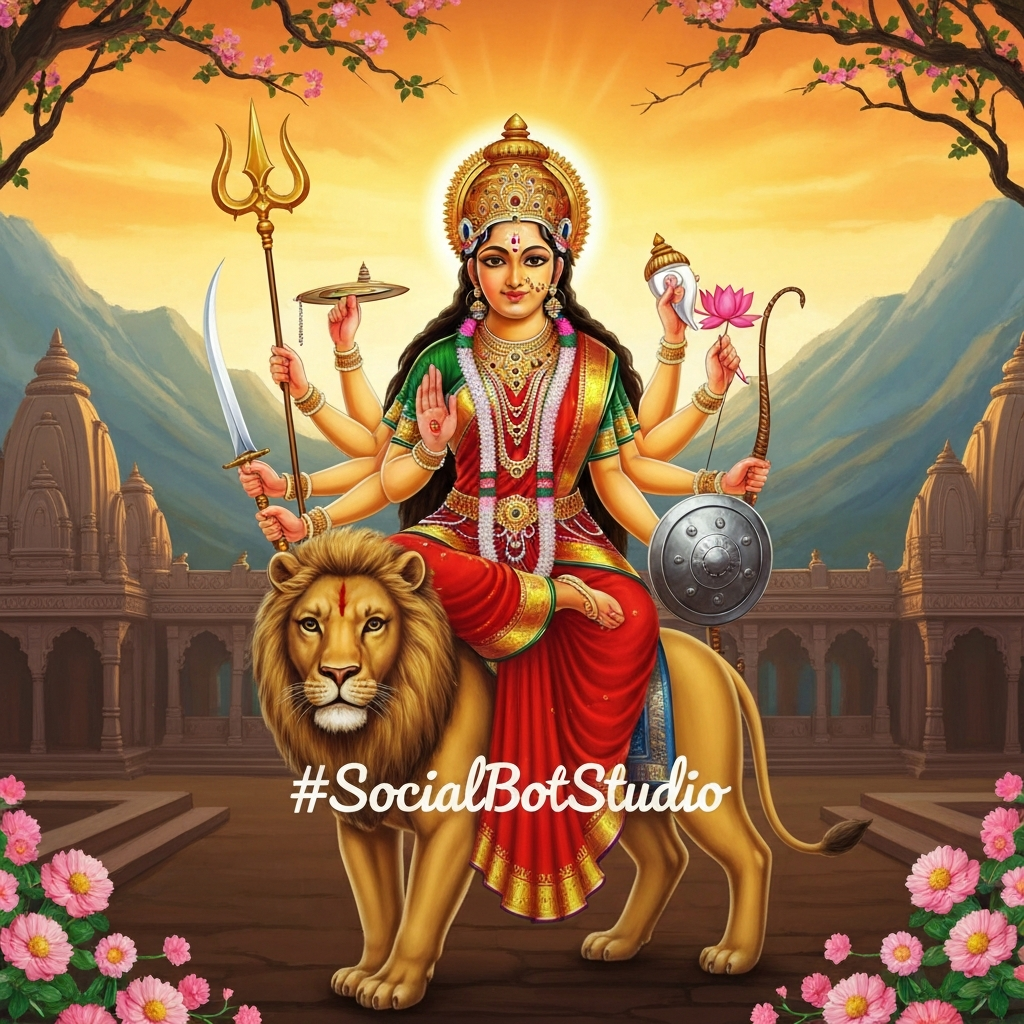
Ambe Tu Hai Jagdambe Kali
अम्बे तू है जगदम्बे काली|Ambe Tu Hai Jagdambe Kali|Mother Ambe, You Are Jagdambe Kali
Also known as: Ambe Tu Hai Jagdambe Kaali · Durga Aarti · Maa Durga Aarti

Cover image generated by AI · #Greetingify · #SocialBotStudio
अम्बे तू है जगदम्बे काली,जय दुर्गे खप्पर वाली,तेरे ही गुण गावें भारती,ओ मैया हम सब उतारे तेरी आरती।
तेरे भक्तजनों पर मैया भीड़ पड़ी है भारी,दानव दल पर टूट पड़ो माँ करके सिंह सवारी।सौ-सौ सिंंहो से बलशाली,है अष्ट भुजाओं वाली,दुष्टों को तू ही ललकारती,ओ मैया हम सब उतारे तेरी आरती।
माँ-बेटे का है इस जग में बड़ा ही निर्मल नाता,पूत कपूत सुने हैं पर ना माता सुनी कुमाता।सब पर करुणा दर्शाती,है अमृत बरसाती,नहीं देर लगाओ महारानी,ओ मैया हम सब उतारे तेरी आरती।
चरणों में तेरे जो आया, वो कभी न खाली लौटा,संकट हरने वाली मैया, तूने सबको संभाला।तेरी शरण में जो आता, वो सुख-शांति पाता,नहीं देर लगाओ महारानी,ओ मैया हम सब उतारे तेरी आरती।
प्रेम से बोलो जय माता दी,सारे बोलो जय माता दी,जोर से बोलो जय माता दी,मिलकर बोलो जय माता दी।
अम्बे तू है जगदम्बे काली, जय दुर्गे खप्पर वाली, तेरे ही गुण गावें भारती, ओ मैया हम सब उतारे तेरी आरती। तेरे भक्तजनों पर मैया भीड़ पड़ी है भारी, दानव दल पर टूट पड़ो माँ करके सिंह सवारी। सौ-सौ सिंंहो से बलशाली, है अष्ट भुजाओं वाली, दुष्टों को तू ही ललकारती, ओ मैया हम सब उतारे तेरी आरती। माँ-बेटे का है इस जग में बड़ा ही निर्मल नाता, पूत कपूत सुने हैं पर ना माता सुनी कुमाता। सब पर करुणा दर्शाती, है अमृत बरसाती, नहीं देर लगाओ महारानी, ओ मैया हम सब उतारे तेरी आरती। चरणों में तेरे जो आया, वो कभी न खाली लौटा, संकट हरने वाली मैया, तूने सबको संभाला। तेरी शरण में जो आता, वो सुख-शांति पाता, नहीं देर लगाओ महारानी, ओ मैया हम सब उतारे तेरी आरती। प्रेम से बोलो जय माता दी, सारे बोलो जय माता दी, जोर से बोलो जय माता दी, मिलकर बोलो जय माता दी।
Mother Ambe, You are Jagdambe Kali, Hail Durga, the skull-bearing one (Khappar Wali), Only your glories are sung by Bharat (India), Oh Mother, we all offer your aarti. Oh Mother, your devotees are facing great troubles, Break upon the demon hordes, Mother, riding your lion. Stronger than a hundred lions, You have eight arms, You alone challenge the wicked, Oh Mother, we all offer your aarti. In this world, the bond between mother and child is very pure, We have heard of wayward sons, but never a bad mother. You show compassion to all, You shower nectar, Do not delay, Great Queen, Oh Mother, we all offer your aarti. Whoever came to your feet, never returned empty-handed, Oh Mother, remover of troubles, you have sustained everyone. Whoever comes to your refuge, finds peace and happiness, Do not delay, Great Queen, Oh Mother, we all offer your aarti. Speak with love, Hail Mother! Everyone say, Hail Mother! Say loudly, Hail Mother! Together say, Hail Mother!
The translation aims to preserve the devotional essence and poetic structure, maintaining stanza breaks. 'Bharat' refers to India. 'Khappar Wali' means 'one who holds a skull', a fierce aspect of Kali.
Ambe Tu Hai Jagdambe Kali" is a widely cherished Hindu devotional song, an aarti dedicated to Goddess Durga, also revered as Ambe and Kali. While its exact origin date and author are not definitively documented, it is believed to have emerged from the rich oral tradition of North Indian devotional music, likely gaining widespread popularity in the late 19th or early 20th century. It belongs to the vast repertoire of Bhakti literature, particularly within the Shakta tradition, which venerates the Divine Mother as the supreme power. The song's simple yet profound lyrics resonate deeply with devotees, making it a staple in homes and temples across India. This aarti holds immense cultural and spiritual significance, serving as a powerful expression of devotion to the Mother Goddess. It is sung to invoke her blessings, seek protection from evil, and express gratitude for her benevolent presence. The lyrics highlight various attributes of Durga, portraying her as the protector of the righteous, the destroyer of evil (demon hordes), and the compassionate mother who never abandons her children. Its widespread recognition makes it a unifying prayer for millions of Hindus, fostering a sense of collective faith and spiritual connection. "Ambe Tu Hai Jagdambe Kali" is primarily performed as part of the aarti ritual, where devotees offer lighted lamps to the deity. It is sung congregationally, often accompanied by claps, bells, and sometimes instruments like harmonium, dholak, or tabla. It is a daily ritual in many households and temples, particularly during the evening aarti. Its presence is almost mandatory during major Hindu festivals dedicated to the Mother Goddess, such as Navaratri, Durga Puja, and Diwali. The collective singing creates an atmosphere of reverence and spiritual unity, reinforcing community bonds and shared cultural identity. The aarti continues to be highly relevant in contemporary Hindu practice. Its timeless message of divine protection and maternal love ensures its enduring appeal across generations. It is frequently featured in religious broadcasts, films, and digital media, ensuring its transmission to new generations and maintaining its cultural footprint. Efforts to preserve this and similar traditional aartis involve documenting various lyrical versions, recording authentic renditions, and promoting its practice in cultural and religious gatherings. Its simple melody and powerful lyrics make it accessible and cherished by devotees of all ages, embodying the living tradition of Hindu devotion and the eternal reverence for the Divine Mother.
Historical Background
Originating from the oral traditions of North India, this aarti likely gained prominence in the late 19th or early 20th century. It is part of the broader Bhakti movement, emphasizing personal devotion to the Divine.
Cultural Significance
A cornerstone of Hindu devotional practice, it embodies the reverence for the Divine Mother (Shakti). It fosters community spirit during festivals and daily worship, serving as a powerful prayer for protection and blessings. Its simple yet profound message ensures its enduring popularity across generations.
Usage & Performance Context
Performed daily during evening aarti in homes and temples. Widely sung during major Hindu festivals dedicated to the Mother Goddess, especially Navaratri, Durga Puja, and Diwali. It is a congregational song, often accompanied by musical instruments and clapping.
अम्बे तू है जगदम्बे काली" एक अत्यंत लोकप्रिय हिंदू भक्ति गीत है, जो देवी दुर्गा को समर्पित एक आरती है। इन्हें अम्बे और काली के रूप में भी पूजा जाता है। यद्यपि इसके सटीक उद्भव की तिथि और रचयिता के बारे में निश्चित जानकारी उपलब्ध नहीं है, माना जाता है कि यह उत्तर भारतीय भक्ति संगीत की समृद्ध मौखिक परंपरा से उभरा है, और संभवतः 19वीं सदी के अंत या 20वीं सदी की शुरुआत में व्यापक लोकप्रियता प्राप्त की। यह शाक्त परंपरा के भक्ति साहित्य का एक महत्वपूर्ण हिस्सा है, जो देवी माँ को सर्वोच्च शक्ति के रूप में पूजती है। इस आरती के सरल किंतु गहन बोल भक्तों के हृदय को छू जाते हैं, जिससे यह भारत भर के घरों और मंदिरों में एक अनिवार्य प्रार्थना बन गई है। यह आरती अत्यधिक सांस्कृतिक और आध्यात्मिक महत्व रखती है, जो देवी माँ के प्रति भक्ति की एक शक्तिशाली अभिव्यक्ति है। इसे उनके आशीर्वाद प्राप्त करने, बुराई से सुरक्षा मांगने और उनकी परोपकारी उपस्थिति के लिए कृतज्ञता व्यक्त करने के लिए गाया जाता है। गीत दुर्गा के विभिन्न गुणों को उजागर करता है, उन्हें धर्मियों की रक्षक, बुराई (दानव दलों) का नाश करने वाली और एक करुणामयी माँ के रूप में चित्रित करता है जो अपने बच्चों को कभी नहीं छोड़ती। इसकी व्यापक पहचान इसे लाखों हिंदुओं के लिए एक एकजुट करने वाली प्रार्थना बनाती है, जिससे सामूहिक विश्वास और आध्यात्मिक जुड़ाव की भावना बढ़ती है। "अम्बे तू है जगदम्बे काली" मुख्य रूप से आरती अनुष्ठान के हिस्से के रूप में प्रस्तुत की जाती है, जहाँ भक्त देवी को जलते हुए दीपक अर्पित करते हैं। इसे सामूहिक रूप से गाया जाता है, अक्सर तालियों, घंटियों और कभी-कभी हारमोनियम, ढोलक या तबला जैसे वाद्ययंत्रों के साथ। यह कई घरों और मंदिरों में एक दैनिक अनुष्ठान है, खासकर शाम की आरती के दौरान। देवी माँ को समर्पित प्रमुख हिंदू त्योहारों जैसे नवरात्रि, दुर्गा पूजा और दिवाली के दौरान इसकी उपस्थिति लगभग अनिवार्य है। सामूहिक गायन श्रद्धा और आध्यात्मिक एकता का माहौल बनाता है, जिससे सामुदायिक बंधन और साझा सांस्कृतिक पहचान मजबूत होती है। यह आरती समकालीन हिंदू अभ्यास में अत्यधिक प्रासंगिक बनी हुई है। दिव्य सुरक्षा और मातृ प्रेम का इसका कालातीत संदेश पीढ़ियों तक इसकी स्थायी अपील सुनिश्चित करता है। इसे अक्सर धार्मिक प्रसारणों, फिल्मों और डिजिटल मीडिया में दिखाया जाता है, जिससे यह नई पीढ़ियों तक पहुंचती है और अपनी सांस्कृतिक छाप बनाए रखती है। इस और इसी तरह की पारंपरिक आरतियों के संरक्षण के प्रयासों में विभिन्न गीतात्मक संस्करणों का दस्तावेजीकरण, प्रामाणिक प्रस्तुतियों की रिकॉर्डिंग और सांस्कृतिक तथा धार्मिक सभाओं में इसके अभ्यास को बढ़ावा देना शामिल है। इसकी सरल धुन और शक्तिशाली बोल इसे सभी उम्र के भक्तों के लिए सुलभ और प्रिय बनाते हैं, जो हिंदू भक्ति की जीवंत परंपरा और देवी माँ के प्रति शाश्वत श्रद्धा का प्रतीक है।
What is "Ambe Tu Hai Jagdambe Kali"?
It is a very popular Hindu devotional song, an aarti, dedicated to Goddess Durga, who is also revered as Ambe and Kali. It is sung to invoke her blessings and express devotion.
When is this aarti typically sung?
This aarti is sung daily during evening worship in many Hindu homes and temples. It is especially prominent during major festivals dedicated to the Mother Goddess, such as Navaratri, Durga Puja, and Diwali.
What is the meaning of "Ambe Tu Hai Jagdambe Kali"?
The title translates to "Ambe, You are Jagdambe Kali," addressing the Divine Mother in her various powerful forms. The song praises her as the protector, the destroyer of evil, and the compassionate mother.
Is "Ambe Tu Hai Jagdambe Kali" a public domain work?
Yes, "Ambe Tu Hai Jagdambe Kali" is widely considered a public domain work, originating from traditional oral traditions in India. Its exact author and date of composition are not definitively known.
Which deities are invoked in this aarti?
This aarti primarily invokes Goddess Durga, who is addressed by various names such as Ambe, Jagdambe, and Kali, all representing different aspects of the supreme Divine Mother (Shakti).
Region
Sung at
Language
Hindi (Devanagari)
Themes
Contributor
Anonymous
Based on 0 ratings.