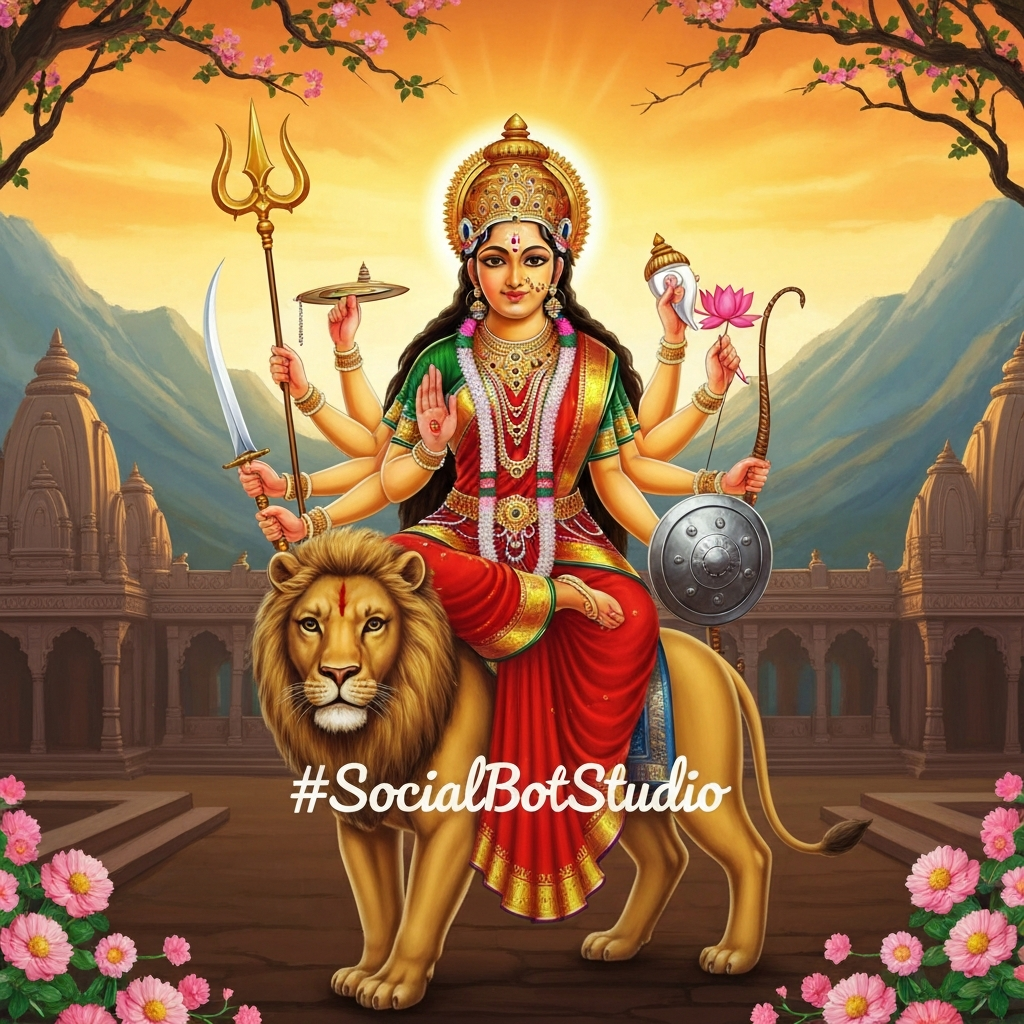
Ya Devi Sarva Bhuteshu
या देवी सर्वभूतेषु|Yā Devī Sarva Bhūteṣu|To That Goddess Who Resides In All Beings
Also known as: Narayani Stuti · Devi Mahatmyam Prayer · Ya Devi Stuti

Cover image generated by AI · #Greetingify · #SocialBotStudio
या देवी सर्वभूतेषु विष्णुमायेति शब्दिता।नमस्तस्यै नमस्तस्यै नमस्तस्यै नमो नमः॥
या देवी सर्वभूतेषु चेतनेत्यभिधीयते।नमस्तस्यै नमस्तस्यै नमस्तस्यै नमो नमः॥
या देवी सर्वभूतेषु बुद्धिरूपेण संस्थिता।नमस्तस्यै नमस्तस्यै नमस्तस्यै नमो नमः॥
या देवी सर्वभूतेषु निद्रारूपेण संस्थिता।नमस्तस्यै नमस्तस्यै नमस्तस्यै नमो नमः॥
या देवी सर्वभूतेषु क्षुधारूपेण संस्थिता।नमस्तस्यै नमस्तस्यै नमस्तस्यै नमो नमः॥
या देवी सर्वभूतेषु छाय रूपेण संस्थिता।नमस्तस्यै नमस्तस्यै नमस्तस्यै नमो नमः॥
या देवी सर्वभूतेषु शक्तिरूपेण संस्थिता।नमस्तस्यै नमस्तस्यै नमस्तस्यै नमो नमः॥
या देवी सर्वभूतेषु तृष्णारूपेण संस्थिता।नमस्तस्यै नमस्तस्यै नमस्तस्यै नमो नमः॥
या देवी सर्वभूतेषु क्षान्तिरूपेण संस्थिता।नमस्तस्यै नमस्तस्यै नमस्तस्यै नमो नमः॥
या देवी सर्वभूतेषु जातिरूपेण संस्थिता।नमस्तस्यै नमस्तस्यै नमस्तस्यै नमो नमः॥
या देवी सर्वभूतेषु लज्जारूपेण संस्थिता।नमस्तस्यै नमस्तस्यै नमस्तस्यै नमो नमः॥
या देवी सर्वभूतेषु शान्तिरूपेण संस्थिता।नमस्तस्यै नमस्तस्यै नमस्तस्यै नमो नमः॥
या देवी सर्वभूतेषु श्रद्धारूपेण संस्थिता।नमस्तस्यै नमस्तस्यै नमस्तस्यै नमो नमः॥
या देवी सर्वभूतेषु कान्तिरूपेण संस्थिता।नमस्तस्यै नमस्तस्यै नमस्तस्यै नमो नमः॥
या देवी सर्वभूतेषु लक्ष्मीरूपेण संस्थिता।नमस्तस्यै नमस्तस्यै नमस्तस्यै नमो नमः॥
या देवी सर्वभूतेषु वृत्तिरूपेण संस्थिता।नमस्तस्यै नमस्तस्यै नमस्तस्यै नमो नमः॥
या देवी सर्वभूतेषु स्मृतिरूपेण संस्थिता।नमस्तस्यै नमस्तस्यै नमस्तस्यै नमो नमः॥
या देवी सर्वभूतेषु दयारूपेण संस्थिता।नमस्तस्यै नमस्तस्यै नमस्तस्यै नमो नमः॥
या देवी सर्वभूतेषु मातृरूपेण संस्थिता।नमस्तस्यै नमस्तस्यै नमस्तस्यै नमो नमः॥
या देवी सर्वभूतेषु भ्रान्तिरूपेण संस्थिता।नमस्तस्यै नमस्तस्यै नमस्तस्यै नमो नमः॥
इन्द्रियाणामधिष्ठात्री भूतानां चाखिलेषु या।भूतेषु सततं तस्यै व्याप्तिदेव्यै नमो नमः॥
चितिरूपेण या कृत्स्नमेतद् व्याप्य स्थिता जगत्।नमस्तस्यै नमस्तस्यै नमस्तस्यै नमो नमः॥
या देवी सर्वभूतेषु विष्णुमायेति शब्दिता। नमस्तस्यै नमस्तस्यै नमस्तस्यै नमो नमः॥ या देवी सर्वभूतेषु चेतनेत्यभिधीयते। नमस्तस्यै नमस्तस्यै नमस्तस्यै नमो नमः॥ या देवी सर्वभूतेषु बुद्धिरूपेण संस्थिता। नमस्तस्यै नमस्तस्यै नमस्तस्यै नमो नमः॥ या देवी सर्वभूतेषु निद्रारूपेण संस्थिता। नमस्तस्यै नमस्तस्यै नमस्तस्यै नमो नमः॥ या देवी सर्वभूतेषु क्षुधारूपेण संस्थिता। नमस्तस्यै नमस्तस्यै नमस्तस्यै नमो नमः॥ या देवी सर्वभूतेषु छाय रूपेण संस्थिता। नमस्तस्यै नमस्तस्यै नमस्तस्यै नमो नमः॥ या देवी सर्वभूतेषु शक्तिरूपेण संस्थिता। नमस्तस्यै नमस्तस्यै नमस्तस्यै नमो नमः॥ या देवी सर्वभूतेषु तृष्णारूपेण संस्थिता। नमस्तस्यै नमस्तस्यै नमस्तस्यै नमो नमः॥ या देवी सर्वभूतेषु क्षान्तिरूपेण संस्थिता। नमस्तस्यै नमस्तस्यै नमस्तस्यै नमो नमः॥ या देवी सर्वभूतेषु जातिरूपेण संस्थिता। नमस्तस्यै नमस्तस्यै नमस्तस्यै नमो नमः॥ या देवी सर्वभूतेषु लज्जारूपेण संस्थिता। नमस्तस्यै नमस्तस्यै नमस्तस्यै नमो नमः॥ या देवी सर्वभूतेषु शान्तिरूपेण संस्थिता। नमस्तस्यै नमस्तस्यै नमस्तस्यै नमो नमः॥ या देवी सर्वभूतेषु श्रद्धारूपेण संस्थिता। नमस्तस्यै नमस्तस्यै नमस्तस्यै नमो नमः॥ या देवी सर्वभूतेषु कान्तिरूपेण संस्थिता। नमस्तस्यै नमस्तस्यै नमस्तस्यै नमो नमः॥ या देवी सर्वभूतेषु लक्ष्मीरूपेण संस्थिता। नमस्तस्यै नमस्तस्यै नमस्तस्यै नमो नमः॥ या देवी सर्वभूतेषु वृत्तिरूपेण संस्थिता। नमस्तस्यै नमस्तस्यै नमस्तस्यै नमो नमः॥ या देवी सर्वभूतेषु स्मृतिरूपेण संस्थिता। नमस्तस्यै नमस्तस्यै नमस्तस्यै नमो नमः॥ या देवी सर्वभूतेषु दयारूपेण संस्थिता। नमस्तस्यै नमस्तस्यै नमस्तस्यै नमो नमः॥ या देवी सर्वभूतेषु मातृरूपेण संस्थिता। नमस्तस्यै नमस्तस्यै नमस्तस्यै नमो नमः॥ या देवी सर्वभूतेषु भ्रान्तिरूपेण संस्थिता। नमस्तस्यै नमस्तस्यै नमस्तस्यै नमो नमः॥ इन्द्रियाणामधिष्ठात्री भूतानां चाखिलेषु या। भूतेषु सततं तस्यै व्याप्तिदेव्यै नमो नमः॥ चितिरूपेण या कृत्स्नमेतद् व्याप्य स्थिता जगत्। नमस्तस्यै नमस्तस्यै नमस्तस्यै नमो नमः॥
To that Devi (Goddess) who is called Vishnu-Maya (the deluding power of Vishnu) in all beings, Salutations to Her, Salutations to Her, Salutations to Her, Salutations again and again! To that Devi who is known as Consciousness in all beings, Salutations to Her, Salutations to Her, Salutations to Her, Salutations again and again! To that Devi who resides in all beings in the form of Intelligence, Salutations to Her, Salutations to Her, Salutations to Her, Salutations again and again! To that Devi who resides in all beings in the form of Sleep, Salutations to Her, Salutations to Her, Salutations to Her, Salutations again and again! To that Devi who resides in all beings in the form of Hunger, Salutations to Her, Salutations to Her, Salutations to Her, Salutations again and again! To that Devi who resides in all beings in the form of Shadow (reflection/shade), Salutations to Her, Salutations to Her, Salutations to Her, Salutations again and again! To that Devi who resides in all beings in the form of Power (strength), Salutations to Her, Salutations to Her, Salutations to Her, Salutations again and again! To that Devi who resides in all beings in the form of Thirst (desire), Salutations to Her, Salutations to Her, Salutations to Her, Salutations again and again! To that Devi who resides in all beings in the form of Forgiveness (patience), Salutations to Her, Salutations to Her, Salutations to Her, Salutations again and again! To that Devi who resides in all beings in the form of Caste (species/birth), Salutations to Her, Salutations to Her, Salutations to Her, Salutations again and again! To that Devi who resides in all beings in the form of Modesty (shame), Salutations to Her, Salutations to Her, Salutations to Her, Salutations again and again! To that Devi who resides in all beings in the form of Peace (tranquility), Salutations to Her, Salutations to Her, Salutations to Her, Salutations again and again! To that Devi who resides in all beings in the form of Faith (devotion), Salutations to Her, Salutations to Her, Salutations to Her, Salutations again and again! To that Devi who resides in all beings in the form of Beauty (lustre), Salutations to Her, Salutations to Her, Salutations to Her, Salutations again and again! To that Devi who resides in all beings in the form of Prosperity (Lakshmi), Salutations to Her, Salutations to Her, Salutations to Her, Salutations again and again! To that Devi who resides in all beings in the form of Activity (occupation), Salutations to Her, Salutations to Her, Salutations to Her, Salutations again and again! To that Devi who resides in all beings in the form of Memory, Salutations to Her, Salutations to Her, Salutations to Her, Salutations again and again! To that Devi who resides in all beings in the form of Compassion (mercy), Salutations to Her, Salutations to Her, Salutations to Her, Salutations again and again! To that Devi who resides in all beings in the form of Mother, Salutations to Her, Salutations to Her, Salutations to Her, Salutations again and again! To that Devi who resides in all beings in the form of Delusion (error), Salutations to Her, Salutations to Her, Salutations to Her, Salutations again and again! To that all-pervading Devi, who is the presiding deity of the senses of all beings, Salutations to Her, Salutations to Her, Salutations to Her, Salutations again and again! To that Devi who pervades this entire universe in the form of Consciousness, Salutations to Her, Salutations to Her, Salutations to Her, Salutations again and again!
The translation aims for literal accuracy while conveying the profound devotional and philosophical essence of each invocation, maintaining the repetitive structure to reflect the original Sanskrit.
The 'Ya Devi Sarva Bhuteshu' prayer is a profoundly significant hymn from the Devi Mahatmyam, an ancient Sanskrit text forming a part of the Markandeya Purana, composed around 400-500 CE. This powerful prayer, also known as the Narayani Stuti, is a central pillar of the Shaktism tradition, which reveres the Divine Feminine as the supreme, all-encompassing reality. Its origin is deeply rooted in the Vedic and Puranic traditions of ancient India, emerging from a period of rich philosophical and devotional synthesis. The verses are attributed to the sage Medhas, who reveals the glory of the Devi to King Suratha and the merchant Samadhi. Culturally, 'Ya Devi Sarva Bhuteshu' holds immense significance as it articulates the panentheistic view of the Divine Mother pervading all existence. Each verse identifies the Devi with a specific attribute or aspect present in all beings—from consciousness and intelligence to sleep, hunger, power, forgiveness, and even delusion. This emphasizes the immanence of the divine in every facet of life, fostering a sense of reverence for all creation. It is most prominently recited during Navratri, the nine-night festival dedicated to the Devi, and is a core component of the daily Chandi Path (recitation of Devi Mahatmyam) performed by devotees seeking blessings, protection, and spiritual liberation. While not a musical composition in the classical sense, this prayer is typically chanted or recited in a rhythmic, meditative style. It is primarily an individual or congregational recitation, often performed without specific musical instruments, though sometimes accompanied by simple percussion like bells or cymbals to maintain rhythm in a group setting. Priests and devotees, both men and women, participate in its recitation, particularly in temples and homes during auspicious occasions. The emphasis is on the clarity of pronunciation and the devotional feeling (bhava) rather than complex musicality. In contemporary times, 'Ya Devi Sarva Bhuteshu' remains a vibrant and essential part of Hindu devotional practice. It serves as a powerful reminder of the universal presence of the Divine Mother, promoting unity and respect for all forms of life. Its philosophical depth continues to inspire scholars and spiritual seekers, while its simple yet profound message resonates with millions. The preservation of this prayer through continued recitation, study, and digital archiving is crucial for maintaining the rich heritage of Shaktism and ensuring its wisdom remains accessible for future generations, fostering a deeper connection to the sacred feminine principle in a rapidly changing world.
Historical Background
Composed as part of the Devi Mahatmyam (Durga Saptashati) in the Markandeya Purana, dating back to 400-500 CE. This period saw the consolidation of various Puranic traditions and the rise of devotional movements. The Devi Mahatmyam is a foundational text for Shaktism, establishing the supremacy of the Goddess as the ultimate reality and creator of the universe.
Cultural Significance
This prayer is a cornerstone of Hindu devotional practice, particularly within Shaktism. It instills a deep reverence for the Divine Feminine and promotes the understanding that the divine is not merely transcendent but also immanent in every aspect of existence. Its recitation during Navratri reinforces cultural identity and spiritual connection, fostering community bonding and individual spiritual growth. It serves as a powerful affirmation of the sacredness of all life and the interconnectedness of the universe.
Usage & Performance Context
Primarily recited as a daily prayer, especially during the morning or evening devotion. It is a central hymn during the Navratri festival, chanted in homes and temples. It is also used in various Devi pujas and homas (fire rituals) throughout the year, particularly on Tuesdays and Fridays, which are considered auspicious for Devi worship.
‘या देवी सर्वभूतेषु’ प्रार्थना देवी माहात्म्य का एक अत्यंत महत्वपूर्ण स्तोत्र है, जो मार्कण्डेय पुराण का एक प्राचीन संस्कृत ग्रंथ है, जिसकी रचना लगभग 400-500 ईस्वी सन् में हुई थी। यह शक्तिशाली प्रार्थना, जिसे नारायणी स्तुति के नाम से भी जाना जाता है, शाक्त परंपरा का एक केंद्रीय स्तंभ है, जो दिव्य स्त्री शक्ति को सर्वोच्च, सर्वव्यापी वास्तविकता के रूप में पूजता है। इसकी उत्पत्ति प्राचीन भारत की वैदिक और पौराणिक परंपराओं में गहराई से निहित है, जो दार्शनिक और भक्तिपूर्ण संश्लेषण के समृद्ध काल से उभरी है। इन श्लोकों का श्रेय ऋषि मेधा को दिया जाता है, जिन्होंने राजा सुरथ और व्यापारी समाधि को देवी की महिमा का रहस्योद्घाटन किया था। सांस्कृतिक रूप से, ‘या देवी सर्वभूतेषु’ का अत्यधिक महत्व है क्योंकि यह दिव्य माँ की सर्वव्यापी उपस्थिति के पैनेंथिस्टिक दृष्टिकोण को व्यक्त करता है। प्रत्येक श्लोक देवी को सभी प्राणियों में मौजूद एक विशिष्ट गुण या पहलू के साथ पहचानता है—चेतना और बुद्धि से लेकर निद्रा, भूख, शक्ति, क्षमा और यहां तक कि भ्रम तक। यह जीवन के हर पहलू में दिव्य की अंतर्निहितता पर जोर देता है, जिससे सभी रचनाओं के प्रति श्रद्धा का भाव उत्पन्न होता है। यह विशेष रूप से नवरात्रि के दौरान, देवी को समर्पित नौ रातों के त्योहार पर, और भक्तों द्वारा सुरक्षा, आशीर्वाद और आध्यात्मिक मुक्ति के लिए किए जाने वाले दैनिक चंडी पाठ (देवी माहात्म्य का पाठ) का एक मुख्य घटक है। हालांकि यह शास्त्रीय अर्थ में कोई संगीत रचना नहीं है, यह प्रार्थना आमतौर पर एक लयबद्ध, ध्यानपूर्ण शैली में जप या पाठ की जाती है। यह मुख्य रूप से एक व्यक्तिगत या सामूहिक पाठ है, जो अक्सर बिना किसी विशिष्ट संगीत वाद्ययंत्र के किया जाता है, हालांकि कभी-कभी समूह में ताल बनाए रखने के लिए साधारण ताल वाद्य जैसे घंटियाँ या झांझ के साथ हो सकता है। पुजारी और भक्त, पुरुष और महिला दोनों, विशेष रूप से मंदिरों और घरों में शुभ अवसरों पर इसका पाठ करते हैं। इसमें जटिल संगीत पर नहीं, बल्कि उच्चारण की स्पष्टता और भक्ति भाव पर जोर दिया जाता है। आधुनिक समय में, ‘या देवी सर्वभूतेषु’ हिंदू भक्ति अभ्यास का एक जीवंत और अनिवार्य हिस्सा बना हुआ है। यह दिव्य माँ की सार्वभौमिक उपस्थिति का एक शक्तिशाली अनुस्मारक है, जो एकता और सभी जीवन रूपों के प्रति सम्मान को बढ़ावा देता है। इसकी दार्शनिक गहराई विद्वानों और आध्यात्मिक साधकों को प्रेरित करती रहती है, जबकि इसका सरल फिर भी गहन संदेश लाखों लोगों के साथ प्रतिध्वनित होता है। इस प्रार्थना का निरंतर पाठ, अध्ययन और डिजिटल संग्रह के माध्यम से संरक्षण शाक्त धर्म की समृद्ध विरासत को बनाए रखने और यह सुनिश्चित करने के लिए महत्वपूर्ण है कि इसका ज्ञान भविष्य की पीढ़ियों के लिए सुलभ रहे, जिससे तेजी से बदलती दुनिया में पवित्र स्त्री सिद्धांत के साथ गहरा संबंध स्थापित हो सके।
What is 'Ya Devi Sarva Bhuteshu'?
'Ya Devi Sarva Bhuteshu' is a series of Sanskrit verses from the Devi Mahatmyam (Chapter 11, Narayani Stuti), a foundational scripture of Shaktism. It is a powerful prayer that invokes and praises the Divine Mother (Devi) as the all-pervading consciousness and energy present in every aspect of creation and all beings.
What is the significance of this prayer in Hinduism?
This prayer holds immense significance in Hinduism, particularly in the Shaktism tradition. It emphasizes the immanence of the Divine Feminine, recognizing the Goddess in various forms like intelligence, sleep, hunger, power, and compassion within all beings. It fosters a deep reverence for all life and the universal presence of the divine.
When is 'Ya Devi Sarva Bhuteshu' typically recited?
It is most prominently recited during the Navratri festival, a nine-night celebration of the Divine Mother. It is also a common part of daily Hindu prayers, especially during morning and evening devotion, and is included in various Devi Pujas and Homas throughout the year.
What scripture does 'Ya Devi Sarva Bhuteshu' come from?
This prayer is an integral part of the Devi Mahatmyam, also known as Durga Saptashati or Chandi Path. The Devi Mahatmyam itself is a part of the Markandeya Purana, an ancient Hindu religious text composed around 400-500 CE.
What are the benefits of chanting 'Ya Devi Sarva Bhuteshu'?
Chanting 'Ya Devi Sarva Bhuteshu' is believed to invoke the blessings of the Divine Mother for protection, wisdom, strength, peace, and spiritual awakening. It helps devotees recognize the divine within themselves and all creation, fostering a sense of unity, compassion, and devotion, leading to inner harmony and liberation.
Region
Sung at
Language
Sanskrit (Devanagari)
Themes
Contributor
Anonymous
Based on 0 ratings.