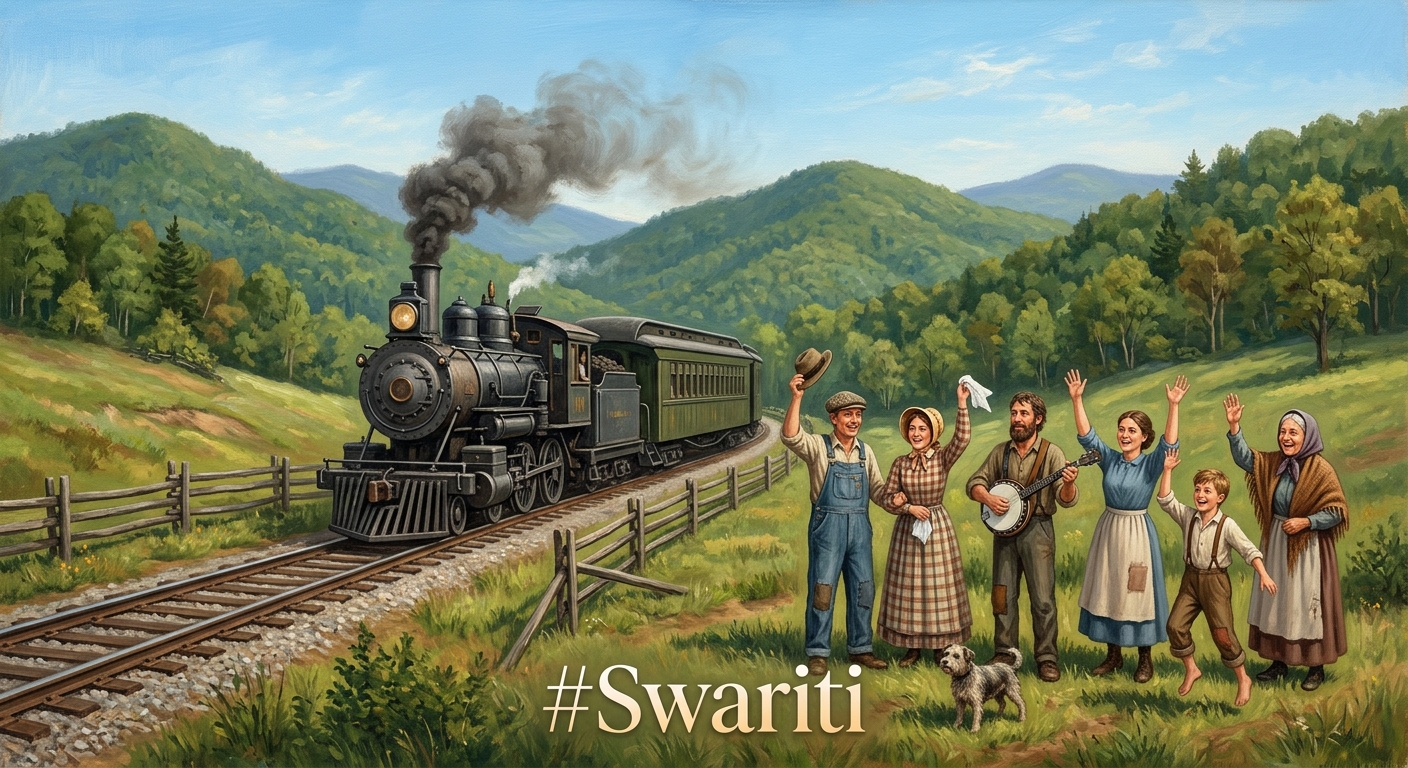
Home on the Range
Home on the Range|Home on the Range
Also known as: My Western Home

Cover image generated by AI · #Greetingify · #SocialBotStudio
Oh, give me a home where the buffalo roam,Where the deer and the antelope play,Where seldom is heard a discouraging word,And the skies are not cloudy all day.
How often at night when the heavens are bright,With the light of the glittering stars,Have I stood there amazed and asked as I gazed,If God made those wonderful worlds.
The red man's delight, a swift, graceful sight,On a mustang so fleet and so free,With a dash and a bound, he sweeps over the ground,And leaves the pale face to the tree.
Oh, give me a land where the bright diamond sandThrows its light from the glittering stream,Where the graceful white swan goes gliding along,Like a maid in a heavenly dream.
The air is so pure, the zephyrs so free,The breezes so balmy and light,That I would not exchange my home on the rangeFor all of the cities so bright.
Oh, give me a home where the buffalo roam, Where the deer and the antelope play, Where seldom is heard a discouraging word, And the skies are not cloudy all day. How often at night when the heavens are bright, With the light of the glittering stars, Have I stood there amazed and asked as I gazed, If God made those wonderful worlds. The red man's delight, a swift, graceful sight, On a mustang so fleet and so free, With a dash and a bound, he sweeps over the ground, And leaves the pale face to the tree. Oh, give me a land where the bright diamond sand Throws its light from the glittering stream, Where the graceful white swan goes gliding along, Like a maid in a heavenly dream. The air is so pure, the zephyrs so free, The breezes so balmy and light, That I would not exchange my home on the range For all of the cities so bright.
The lyrics are in English, so no direct translation is provided. The 'lyrics_translation' field repeats the original text for consistency.
The iconic American folk song 'Home on the Range' originated as a poem titled 'My Western Home,' penned by Dr. Brewster Higley in 1872. Higley, a physician, wrote the verses while living in Smith County, Kansas, capturing the beauty and solitude of the Great Plains. The poem was first published in the Kirwin Chief newspaper. It was later set to music by Daniel E. Kelley, a local rancher and friend of Higley's, though the exact melody's origin is debated, with some suggesting it was adapted from an existing folk tune. The song quickly spread through oral tradition among cowboys, pioneers, and settlers across the American West, becoming an anthem for the frontier spirit. Its simple, evocative language and memorable melody resonated deeply with those living in or dreaming of the vast, untamed landscapes of the West. The song's popularity grew steadily, eventually reaching national prominence by the early 20th century. Culturally, 'Home on the Range' became synonymous with the American West, embodying themes of freedom, nature, and a longing for a simpler life away from the complexities of urban civilization. It was sung around campfires, in saloons, and in homes, serving as both entertainment and a reflection of the settlers' experiences. While not tied to specific festivals or rituals, its themes align with national celebrations of American heritage and pioneering spirit. It has been adopted by various organizations and even served as the official state song of Kansas since 1947. The song's enduring appeal lies in its ability to evoke a powerful sense of place and nostalgia for a bygone era of American expansion and exploration. Performance of 'Home on the Range' is typically informal and communal. It is often sung a cappella or accompanied by simple folk instruments such as acoustic guitar, banjo, fiddle, or harmonica. Its straightforward melody and chord progression make it accessible to amateur musicians and singers. It can be performed solo, as a group sing-along, or in a call-and-response style, though a full chorus is common. The song's gentle tempo and lyrical content make it suitable for quiet reflection or as a comforting lullaby. Its widespread recognition means it is frequently taught in schools and performed at community gatherings, perpetuating its legacy across generations. Today, 'Home on the Range' remains a cherished piece of American cultural heritage. It continues to be performed by folk artists, covered by popular musicians, and featured in films and television, solidifying its place in the national consciousness. Its preservation is vital for understanding the historical narrative of the American West and the values associated with frontier life. While some verses, like the 'red man's delight,' reflect the historical context of the time and may be viewed differently today, their inclusion in the original text is important for historical accuracy and understanding the evolution of the song. The song serves as a reminder of the nation's natural beauty and the enduring human desire for a place of peace and belonging.
Historical Background
Composed as a poem in 1872 by Dr. Brewster Higley in Smith County, Kansas, and set to music by Daniel E. Kelley. It became widely popular among cowboys and pioneers in the late 19th century and was recognized as a national folk song by the early 20th century. It reflects the romanticized view of the American frontier.
Cultural Significance
An iconic anthem of the American West, symbolizing the spirit of freedom, adventure, and the beauty of the vast plains. It is the official state song of Kansas and is deeply embedded in American cultural identity, representing a longing for a simpler, natural existence.
Usage & Performance Context
Informal gatherings, campfires, educational settings, folk music concerts, national heritage events, as a lullaby. Sung by individuals, families, and communities.
What is the origin of 'Home on the Range'?
'Home on the Range' originated as a poem titled 'My Western Home' written by Dr. Brewster Higley in Smith County, Kansas, in 1872. It was later set to music by Daniel E. Kelley, a local rancher, and quickly spread through oral tradition across the American West.
Is 'Home on the Range' in the public domain?
Yes, 'Home on the Range' is firmly in the public domain. Its age, widespread publication without copyright renewal, and status as a traditional folk song ensure that it is freely available for use, performance, and adaptation.
Why is 'Home on the Range' considered an important American folk song?
It is important because it encapsulates the spirit of the American frontier, romanticizing the vast landscapes, wildlife, and the desire for freedom and a simpler life. It became an anthem for cowboys and pioneers and is deeply embedded in American cultural identity, serving as the official state song of Kansas.
What themes are explored in 'Home on the Range'?
The song primarily explores themes of nature, freedom, the beauty of the wilderness, and a longing for a peaceful home away from urban life. It also touches upon the pioneer experience and a sense of nostalgia for the untamed American West.
Are there different versions of the lyrics for 'Home on the Range'?
Yes, like many traditional folk songs passed down orally, 'Home on the Range' has several lyrical variations. The original poem had six verses, and over time, some verses were altered, omitted, or new ones added as it became a widely sung folk tune. The version provided here is a commonly accepted complete rendition.
Region
Language
English (Latin)
Themes
Contributor
Anonymous
Based on 0 ratings.